Three States Trio
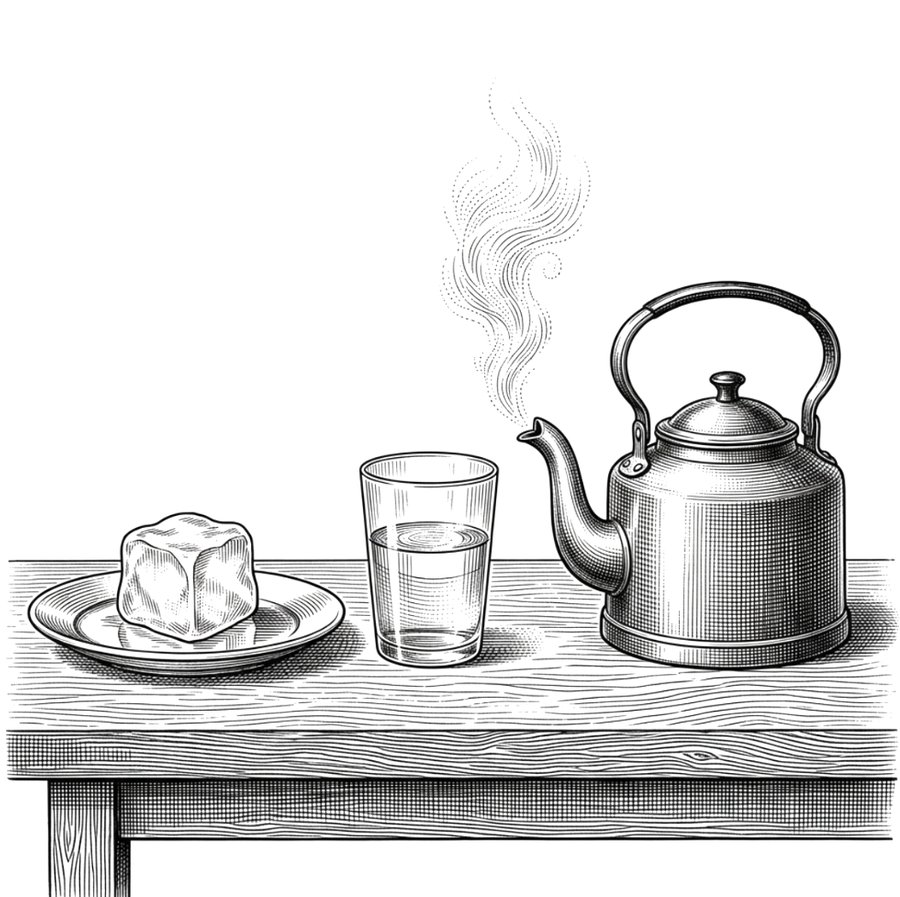
The same substance — water — sits on the table in all three states at once. State words describe how a thing is right now, and the same stuff can wear all three costumes.
⬇ This card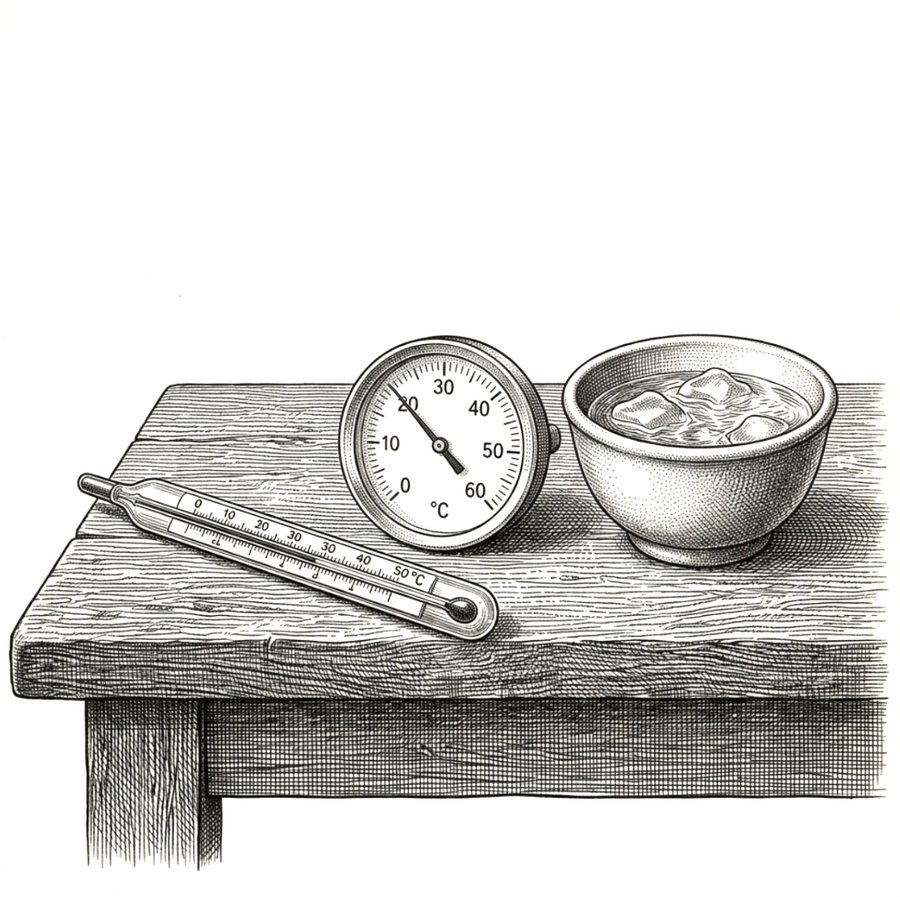
Reading Real Temperatures
Temperature stops being a feeling and becomes a number a child reads for themselves — and water's two magic numbers (32 °F and 212 °F) are where its state changes happen.
⬇ This card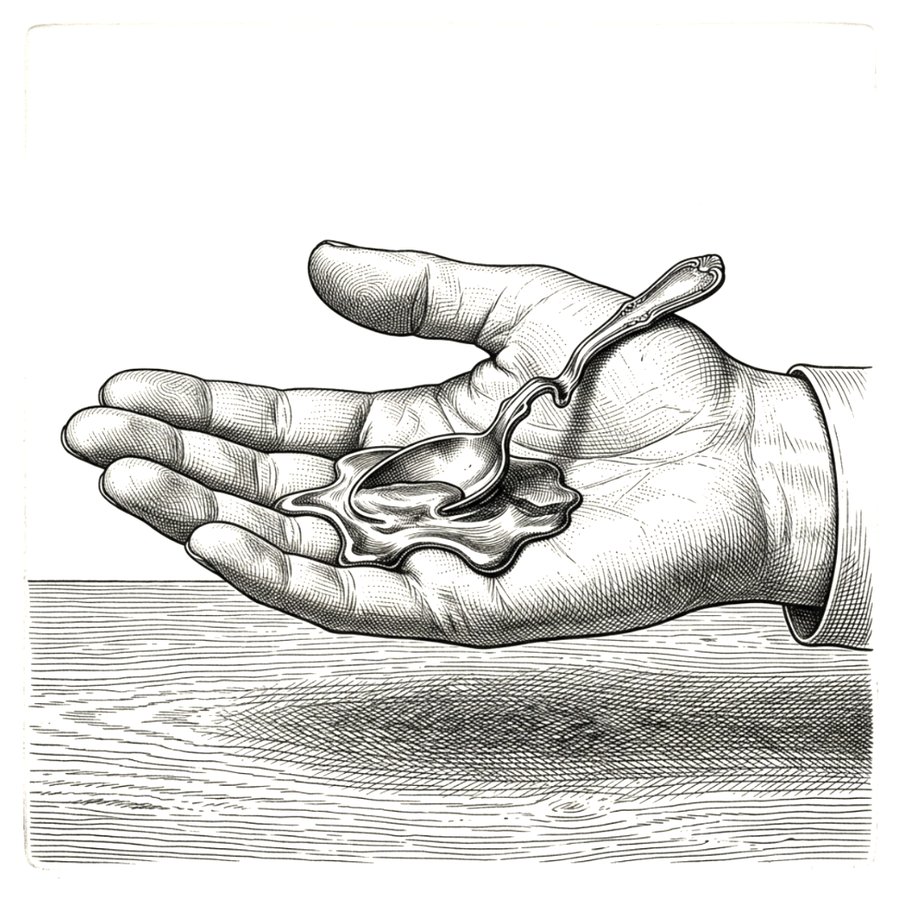
Metal That Melts in Your Hand
Metals melt too — each at its own temperature. Gallium's melting point (≈86 °F) is lower than a person, so body heat alone turns a solid metal into a bright silver puddle.
⬇ This card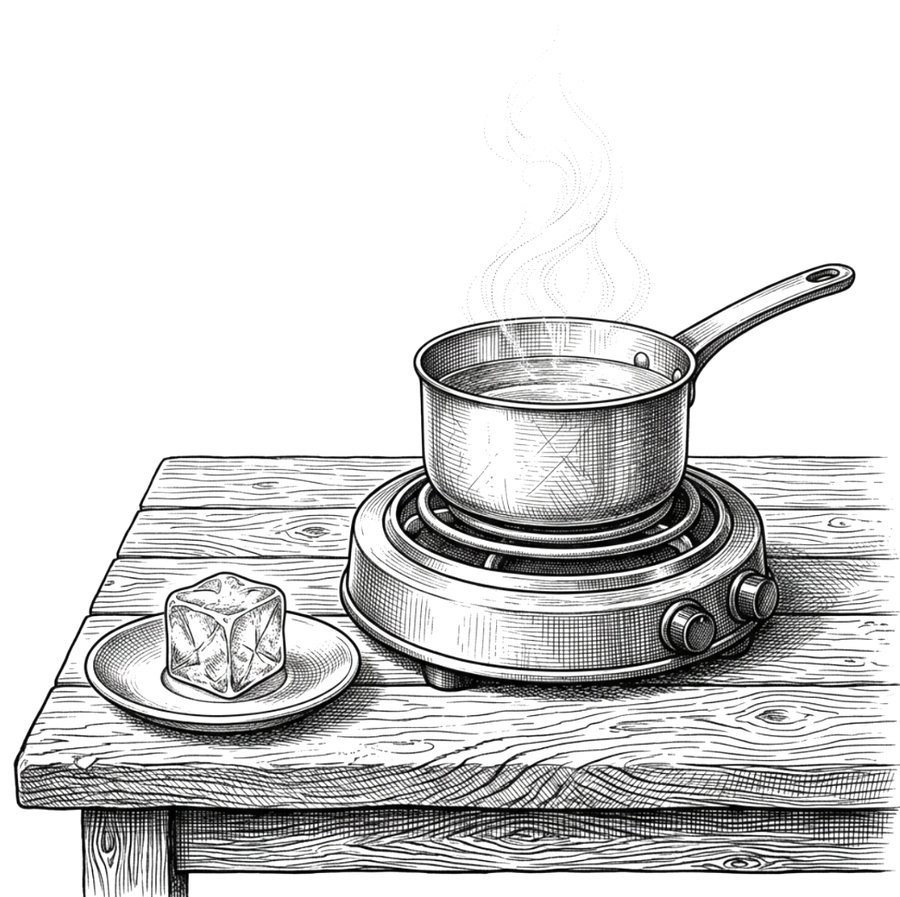
One Ice Cube, All Three States
One single ice cube climbs the whole ladder while the kids watch: solid → liquid → gas. At the end the pan is dry because the water is in the room's air, not gone.
⬇ This card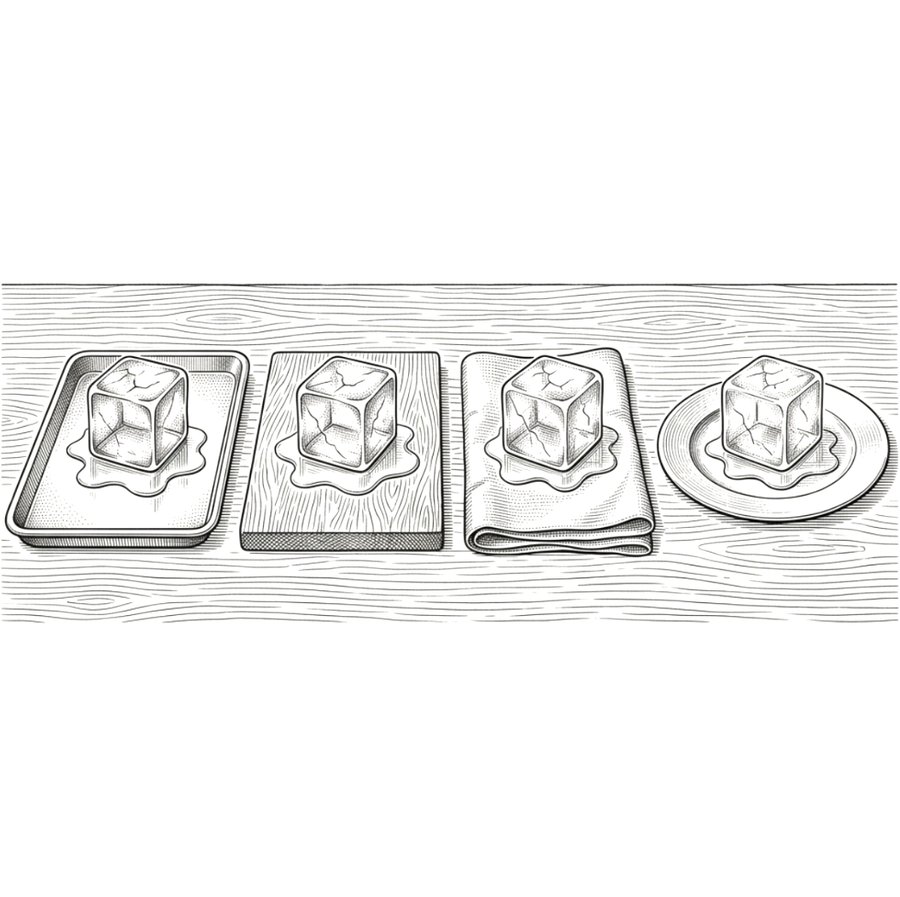
The Melt Race
It isn't only water that changes state. Six materials warm together and melt in order — because every material has its own melting temperature. And the cheese proves not everything melts.
⬇ This card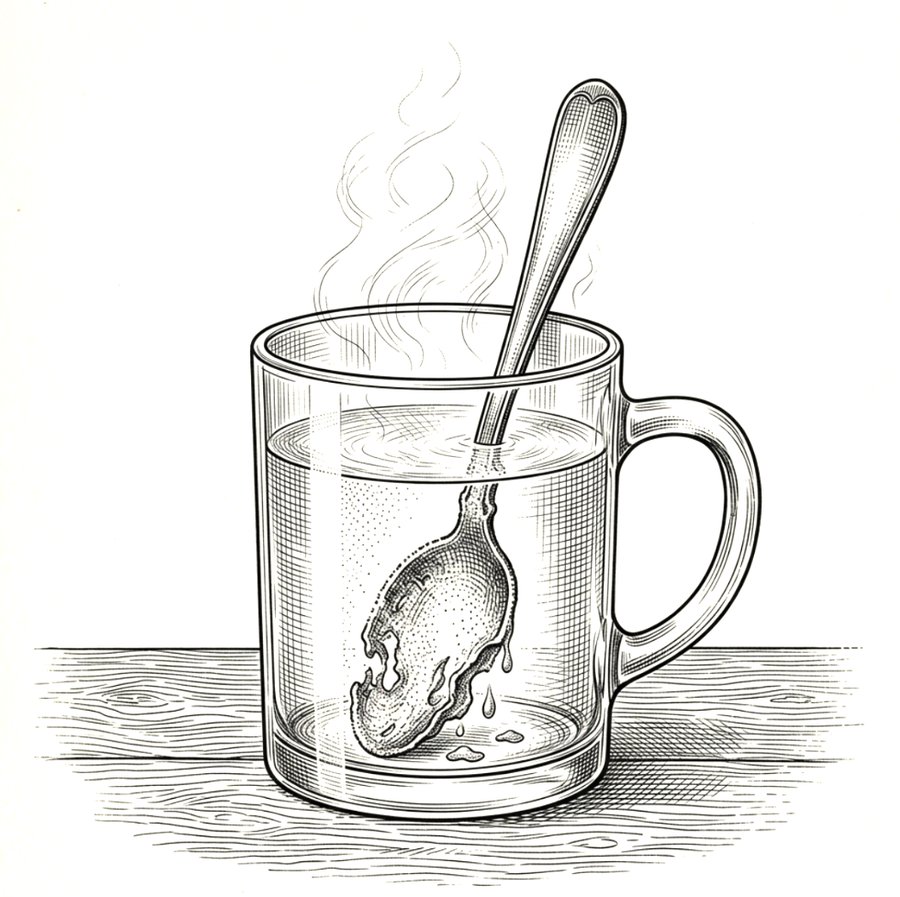
The Disappearing Spoon
A real metal spoon melts away in a mug of hot water — because Field's metal's own melting number (144 °F) sits below hot-water temperature. Metal obeys exactly the same rule as butter.
⬇ This card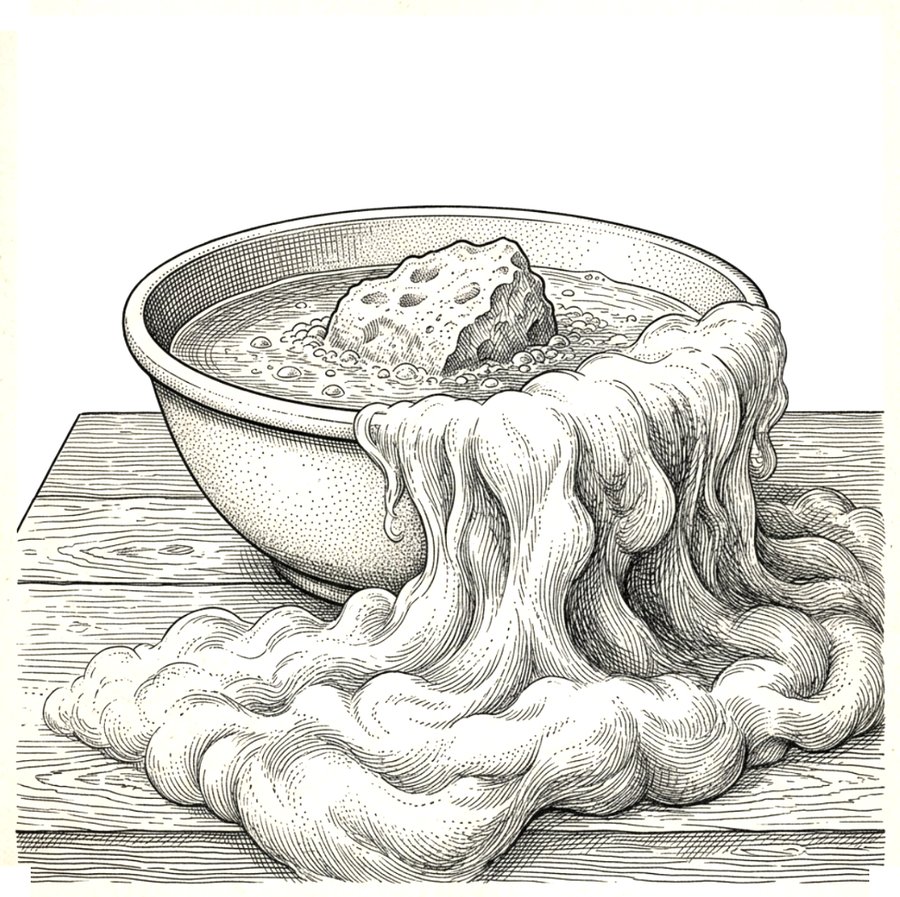
Dry Ice: Solid Straight to Gas
Some solids skip liquid entirely and go straight to gas. That is sublimation — and dry ice proves it beside a normal ice cube: one leaves a puddle, one leaves nothing at all.
⬇ This card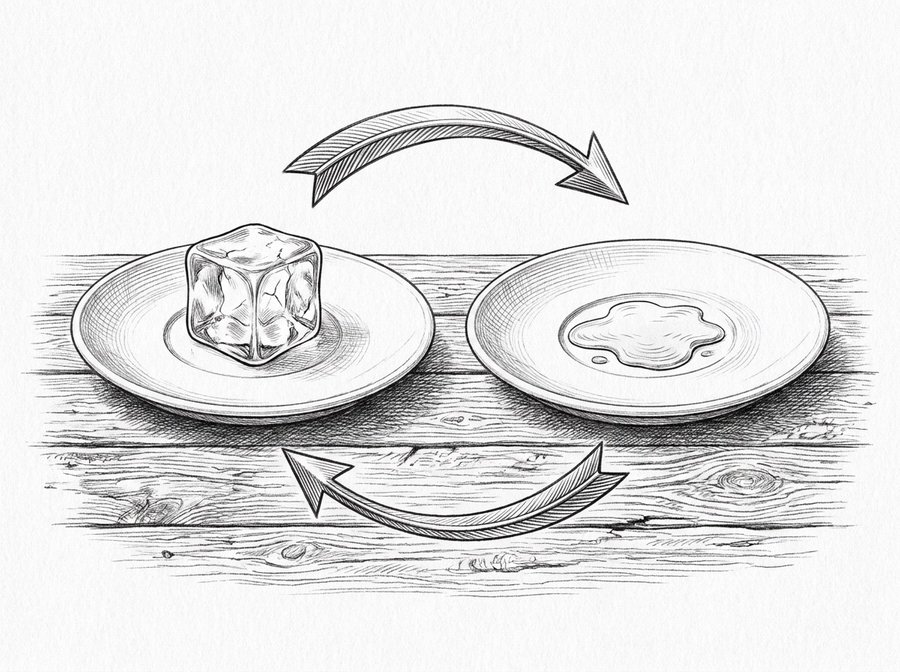
It Goes Both Ways
Melting is not a one-way street. Here's one to hold back for the review: heat in, the ice melts; heat out, the puddle freezes right back — the same water both times.
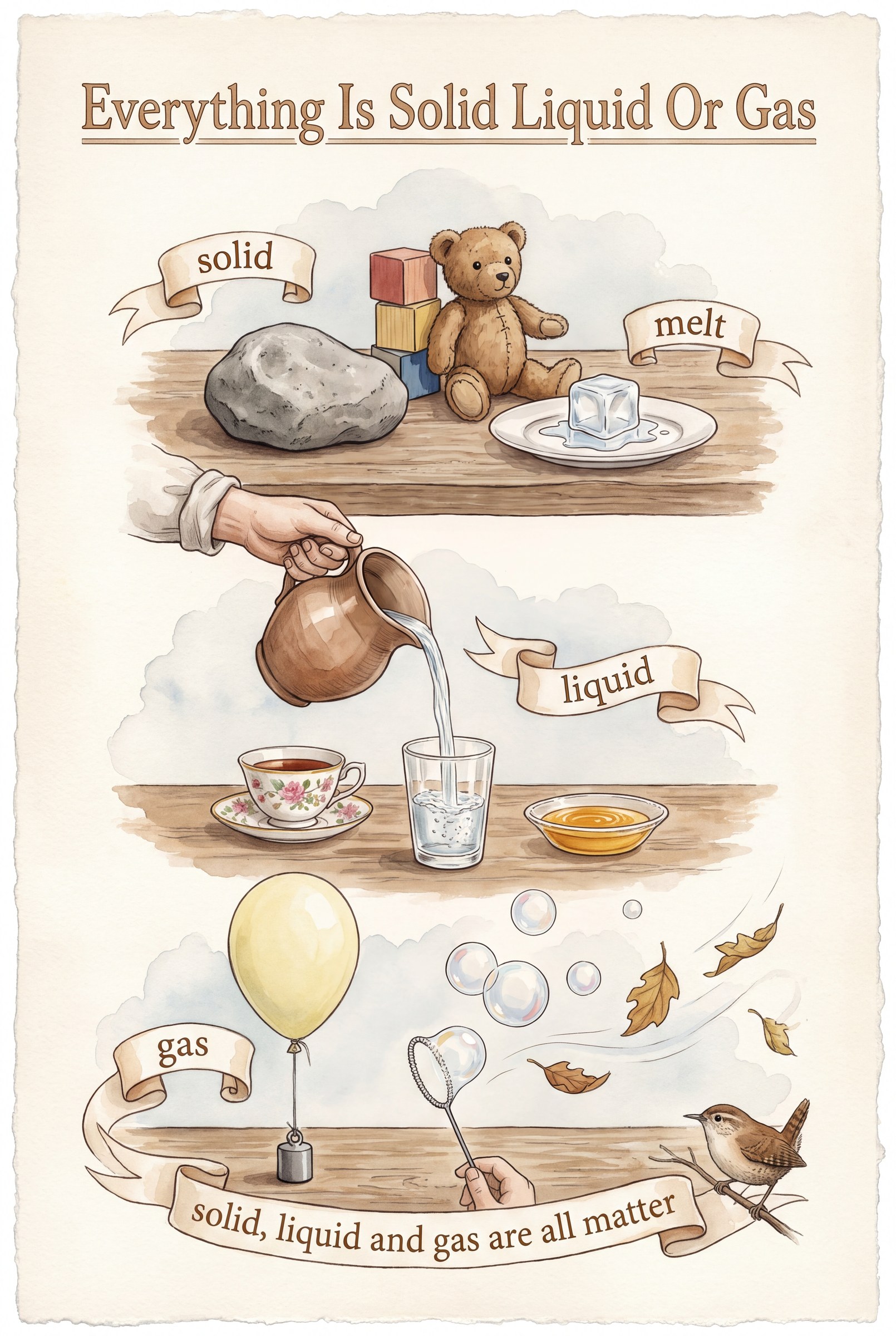
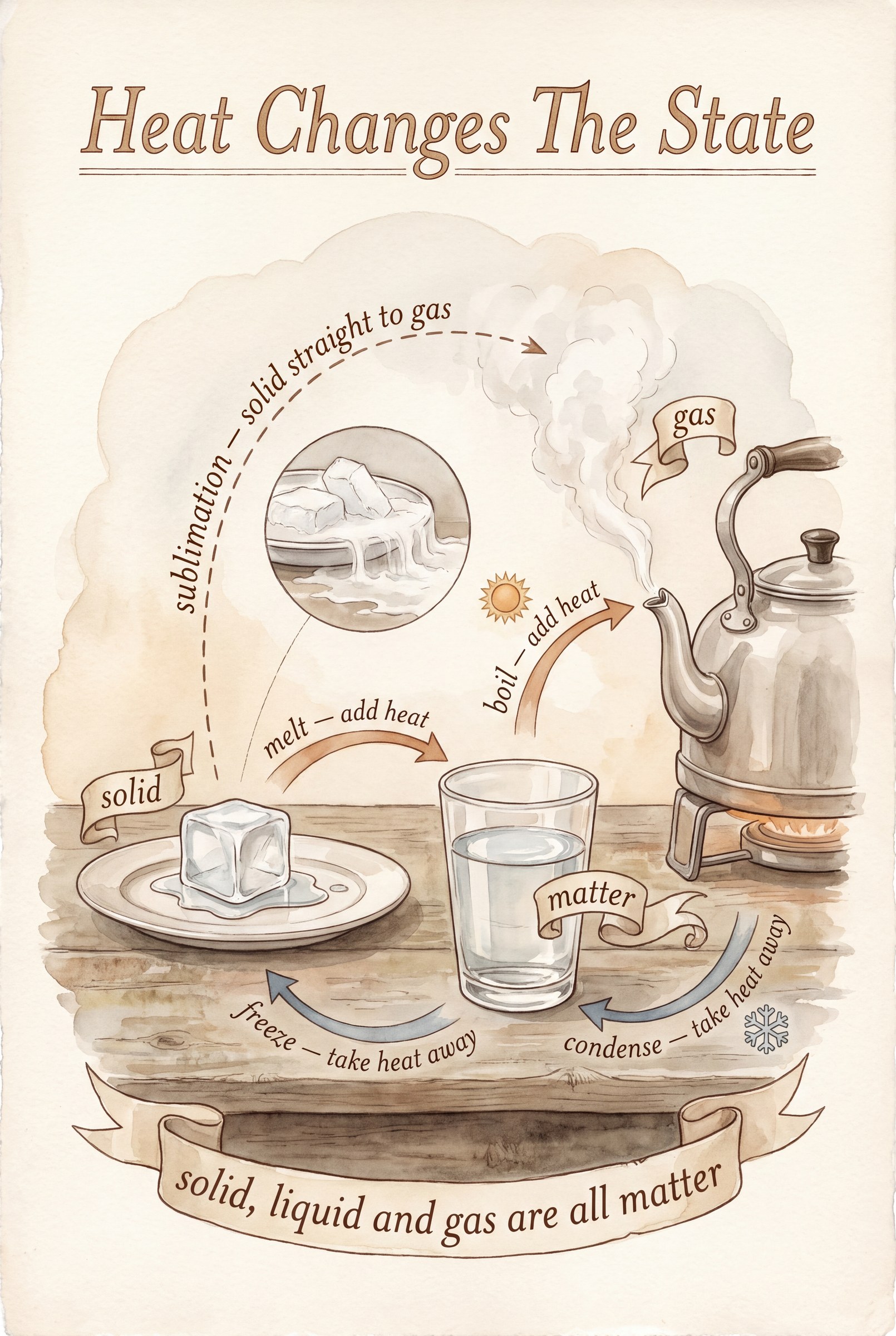
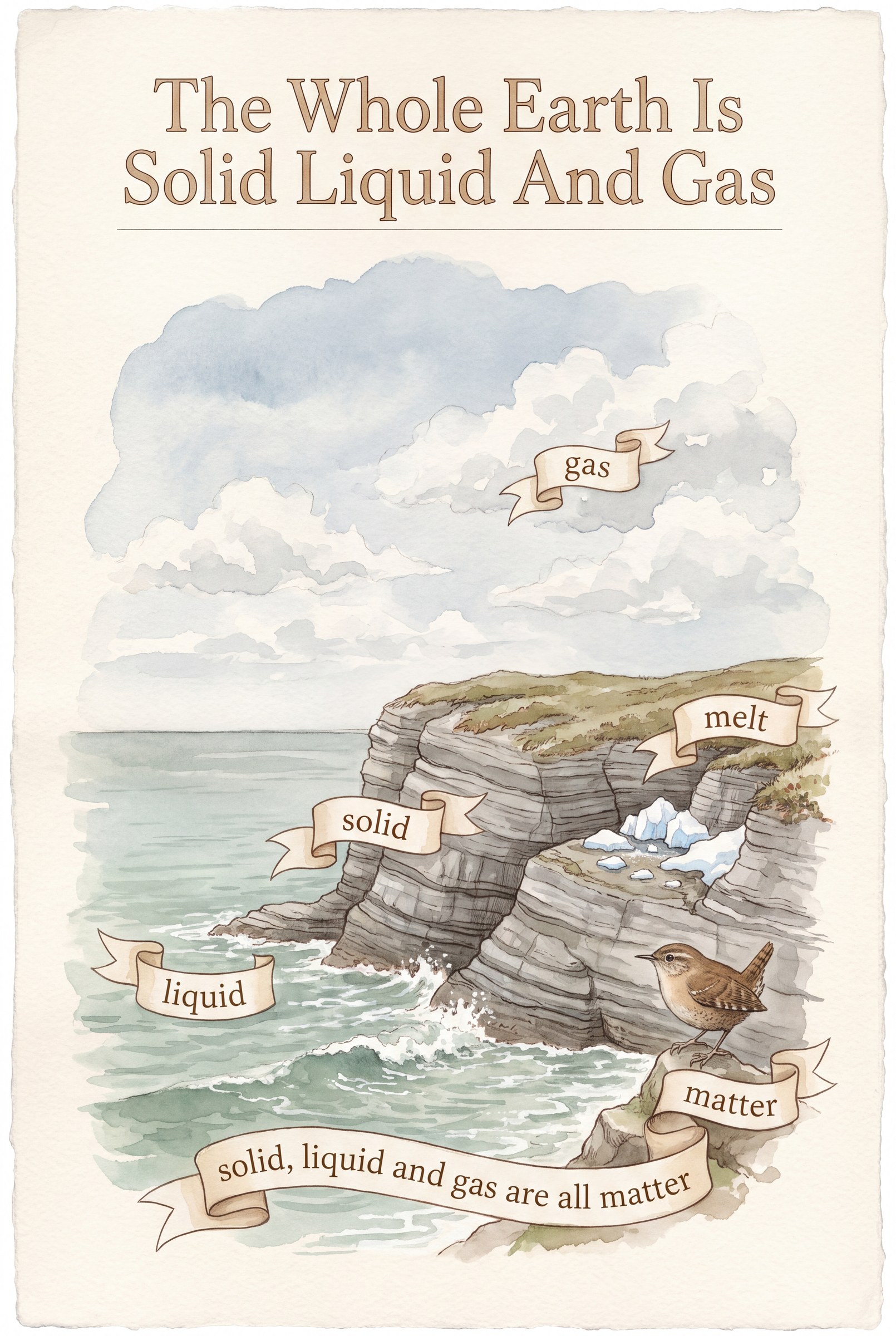
- 3 watercolor posters — Everything Is Solid Liquid or Gas · Heat Changes the State · The Whole Earth Is Solid Liquid and Gas
- 7 experiment cards — from the Three States Trio to the dry-ice finale
- Student binder — Overview, Copywork, My Sorting Chart worksheet, Number Log
- Teacher guide, opening oration, and supply list
- Original song — "Solid Liquid Gas" + lyric sheet
- Floor-game sort cards — solid / liquid / gas zone labels and picture cards
- Every sheet is 8.5×11, black-and-white printer-safe